
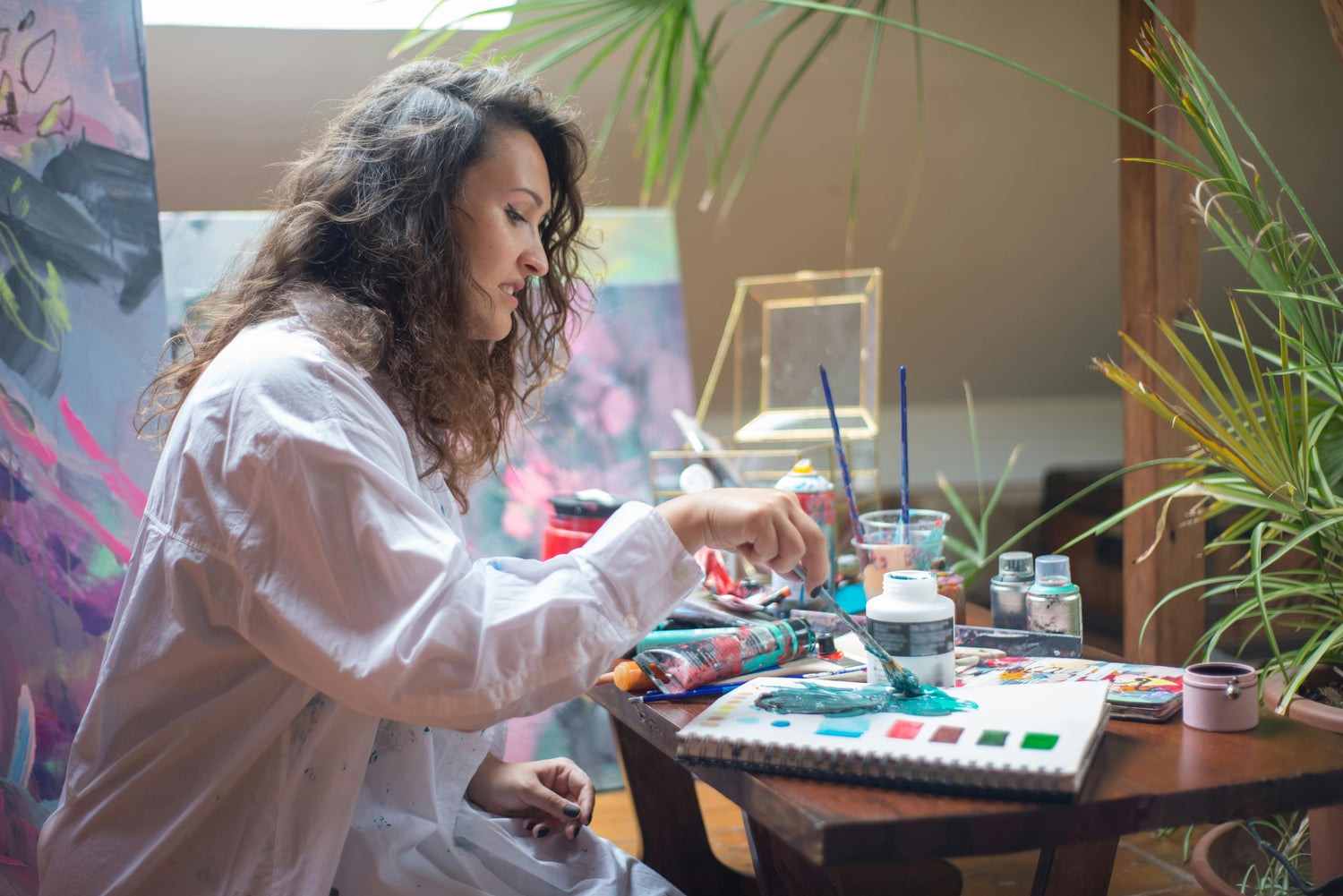
How Creativity Unlocks What Words Can't
There are things inside us that words simply can't hold. Grief that sits too deep to explain. Anxiety that has no clear origin. Trauma that lives in the body long before it ever makes it to the tongue. For thousands of people around the world, the pathway to healing hasn't been found on a therapist's couch, it's been found at a desk, with a paintbrush, a pencil, or a piece of paper.
This is the world of art therapy. And it's a lot more powerful than most people realise.
What is Art Therapy?
Art therapy is a form of psychotherapy that uses creative expression, drawing, painting, sculpting, collaging as a tool for healing, self-discovery and emotional processing. It sits at the intersection of psychology and creativity, guided by trained practitioners who hold a therapeutic space while clients explore what emerges through the act of making.
And here's the thing that surprises most people, it has nothing to do with artistic ability. You don't need to know how to draw. You don't need to create something beautiful. The art is never the point. The process is.
Why Creativity Unlocks What Words Can't
Language is a left brain function. It's analytical, structured and linear. But emotion? Trauma? The deeper parts of our inner world? Those live somewhere else entirely.
When we create, when we pick up a pen and just move it across a page without agenda we shift into the right brain. The intuitive, feeling, non-verbal part of us. And in that space things surface that have been waiting, sometimes for years, to be expressed.
Research has shown that art therapy can reduce symptoms of anxiety and depression, support trauma recovery, lower cortisol levels, improve emotional regulation and increase self-awareness. It gives form to feelings that have never had a name.
One of the most powerful techniques used in art therapy is bilateral drawing where you draw the same movement with both hands simultaneously. This cross lateral movement activates both hemispheres of the brain at once, calming the amygdala and reducing anxiety in real time. It's the same principle behind EMDR, one of the most clinically recognised treatments for trauma in the world. And you can do it with two pens and a piece of paper.
We captured a bilateral drawing session on camera, and the results were something else. Watch it below, and if you want more moments like this, come find us on TikTok and Instagram. We share practices, insights and snippets of the Health & Harmony world there every week.
Who is it For?
Almost anyone. Art therapy is used with children processing big emotions, adults navigating anxiety or depression, trauma survivors, people experiencing grief and those living with chronic illness. It's increasingly used in corporate wellness settings to address burnout and support mental health at work.
But you don't need a diagnosis to benefit. Many people come to art therapy simply because they want a deeper relationship with themselves a way to slow down, tune in and express what everyday life doesn't leave room for.
Can it Become a Career?
Absolutely! and it's a growing one. As demand for holistic and integrative approaches to mental health continues to rise, art therapy practitioners are finding meaningful opportunities across private practice, schools, community health and corporate wellness.
At Health & Harmony we offer art therapy courses designed to give you the knowledge, techniques and practical skills to incorporate art therapy into your existing practice or pursue it as a career path of its own.
Wanting to Explore?
Art therapy isn't about being an artist. It's about giving the parts of you that have no words a way to finally speak. If you'd like to explore that, whether as a personal practice or a professional path, take a look at our art therapy courses at your own pace, or if you'd prefer to talk it through first, book a free call with our team, no pressure, just a conversation.
0 comments