
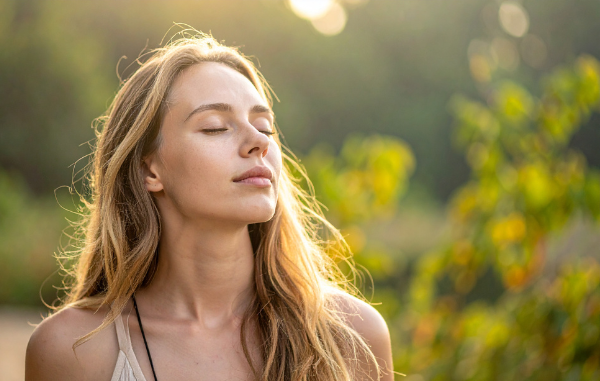
A growing specialty in the wellness industry
Beauty has always been treated as something you do to the outside of the body. Cleanse, exfoliate, treat, repeat. But anyone who has had a stressful month show up on their skin, or noticed their hair changing during a hormonal shift, already knows the truth: what is happening inside the body rarely stays there.
That's where holistic beauty therapy comes in. Instead of asking "what do the skin, hair, or nails need right now?", it asks a deeper question: why is this happening in the first place? That shift from treating what's visible to understanding what's underneath is what makes it such a growing specialty in Australia's wellness industry.
Here's what that shift looks like in practice, through five key benefits of holistic beauty therapy.
1. It treats the root cause, not just the symptom
Conventional beauty training teaches you how to manage what's on the surface. Holistic beauty therapy teaches you how to read it.
That means starting with the body's core systems: the endocrine system, the nervous system, the gastrointestinal system and the reproductive system, and understanding how each one shapes what shows up on the skin, hair, and nails. A breakout, a bout of dullness, nails that suddenly won't grow: these aren't random. They're the body communicating something.
When you understand the integumentary system at a cellular level, how skin repairs, how it regenerates, and what's actually happening when something goes wrong, you stop reaching for a quick fix and start asking the right question. That's a fundamentally different way to work, and clients feel the difference.

2. It connects hormones to how you look and feel
Few things shape appearance as much as hormonal cycles do, and yet this connection is rarely talked about in mainstream beauty.
Skin, hair, and nail condition can shift measurably with hormonal changes. Texture changes, breakouts cluster, nails become more brittle at certain points, and all of it has a physiological reason. Understanding what's driving these changes means you can support your own body more intelligently and hold far more meaningful conversations with clients navigating their own hormonal health.
This is especially true across life transitions. Perimenopause and menopause bring shifts in skin elasticity, hair density, and more. A practitioner who understands the underlying hormonal picture is genuinely useful in a way that surface-level beauty advice simply isn't.
3. It treats nutrition as a beauty tool, not a diet topic
What goes into the body shows up on the outside of it. Most people know this intuitively. Holistic beauty therapy takes it seriously.
Vitamins and minerals have direct physiological effects on skin, hair, and nails, and deficiencies often show up visually before they show up anywhere else. Iron, zinc, biotin, vitamins A, C and E: each has a specific role, and knowing how to recognise the signs of deficiency and where to find these nutrients naturally turns nutrition from a vague wellness concept into a practical tool.
This isn't about putting clients on restrictive diets. It's about understanding the relationship between what we eat and how we look and feel, and being able to have that conversation knowledgeably and without judgement.

4. It draws on energy systems that most beauty training never touches
This is where holistic beauty therapy moves into territory that standard salon training simply doesn't cover.
The Chakra system and the Meridian system, central to traditional Chinese medicine, offer a way of reading the body that sits alongside, not against, the anatomical picture. Each of the seven Chakras has physiological qualities that connect to specific aspects of health and appearance. The twelve organ meridians map energy pathways that, when out of balance, can show up as visible changes on the surface.
These frameworks give a holistic practitioner a completely different lens. You're not replacing clinical knowledge, you're adding depth to it. Clients who have only ever had surface-level beauty treatments often describe this kind of work as the first time they've felt genuinely seen.

5. It starts with self-image, not technique
Most beauty training starts with what to do. Holistic beauty therapy starts with who you are.
Before any technique, treatment or anatomy, there's the question of self-perception. What does beauty actually mean? How is it tied to self-esteem, to identity, to how we move through the world? A holistic beauty practitioner isn't just trusted with someone's skin. They're trusted with someone's confidence. That's a different kind of responsibility.
Starting with that awareness isn't idealistic. It's practical. A practitioner who has genuinely explored their own relationship with beauty and self-image brings something to a client that no amount of technical training can manufacture.
Want to take this further?
If this way of thinking about beauty resonates with you, our Holistic Beauty and Wellness Practitioner Course covers all of it: anatomy and physiology, hormonal health, nutrition, the Chakra and Meridian systems, and the self-awareness that underpins genuine holistic practice.
It's entirely online and self-paced, so you can build this knowledge around your life.
Right now, our EOFY sale means you can save 30% on this course.
Original price: $1,200 — with the EOFY discount: $840
Use code 30FOR30 at checkout, but only until 30th of June, so it's worth locking it in before the offer ends.
Learn more about the Holistic Beauty and Wellness Practitioner Course
0 comments