
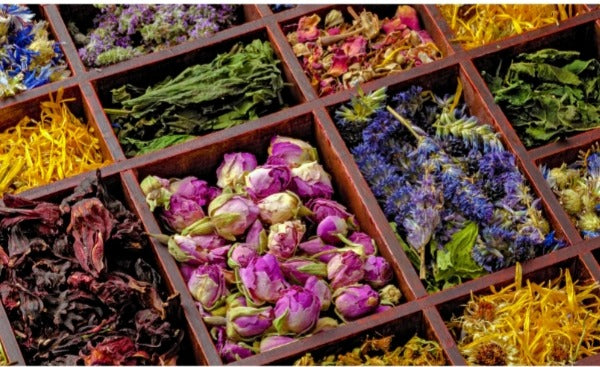
The Ancient Art of Plant-Based Healing
Plants were the first medicine. Long before clinical trials and pharmaceutical patents, healers in India, China, Europe, and across the ancient world were cataloguing the properties of plants, refining their preparations, and passing that knowledge down through generations. They weren't guessing. They were observing, testing, and building a body of understanding that, in many cases, modern science has since validated.
That tradition never disappeared. It endured because it worked. And now, as more people look for approaches that treat the whole person rather than just the symptom, it's finding a new generation of practitioners who want to understand it properly.
If you're curious about what that looks like, the Master Herbalist Course at Health & Harmony is a good place to start. But first, here's what herbal medicine is, how it works, and why it goes much deeper than most people realise.

What Herbal Medicine Is
Herbal medicine is the use of plants and plant-based preparations to support health and treat illness. It is the oldest form of medicine on earth, and the foundation from which much of modern pharmacology grew.
But it isn't just a precursor to modern drugs. It operates from a different set of principles, one that considers the whole plant, the whole person, and the relationship between them. At its core is the concept of vital energy: the idea that the body has an innate intelligence and a drive toward balance. Herbal medicine works to support that capacity, rather than simply suppressing symptoms. The traditions differ in language. The underlying intelligence is the same.
How Plants Work in the Body
Every therapeutic herb contains active constituents: chemical compounds that interact with the body's systems in specific, measurable ways:
- Echinacea modulates immune function.
- Ginger has anti-inflammatory and digestive properties.
- Hawthorn supports cardiovascular health.
- Valerian acts on GABA receptors in the brain, producing a calming effect on the nervous system.
These aren't folk beliefs. They're understood mechanisms, studied and documented across decades of botanical research.
But active constituents don't tell the whole story. Herbalists work with whole plants, not isolated compounds, because the full spectrum of a plant's constituents often works synergistically in ways that extraction and isolation can't replicate. Understanding this distinction, between a supplement and a medicine, between a remedy and a therapeutic relationship, is part of what separates informed herbal practice from guesswork.
Many people who are drawn to herbal medicine are also trying to understand what's happening in their own bodies, particularly around stress and the nervous system. If that's you, our post on why stress gets stuck in the body is a good companion read to this one.

A Tradition With Deep Roots
Herbal medicine didn't begin in any one place. In India, Ayurvedic medicine categorised herbs by their thermal nature and effect on the body's fundamental energies. In China, herbal therapy developed alongside acupuncture with records of plant use dating back over 2,000 years. In Europe, herbalism wove through Greek and Roman medicine, Islamic scholarship, and the monastic traditions of the Middle Ages.
Each tradition brought something different. Together, they form a body of knowledge still being studied and built upon today.
A Few Plants Worth Knowing
Any serious study of herbal medicine begins with the plants themselves. Not just their names, but their properties, their interactions, and when and how to use them. Some of the most widely used therapeutic herbs include:
- Calendula: anti-inflammatory and wound-healing, used for skin conditions and digestive support
- Chamomile: calming for both the nervous system and the digestive tract
- Echinacea: one of the most studied herbs for immune support
- Ginger: warming, anti-inflammatory, and deeply supportive of digestion
- Hawthorn: gentle but powerful support for the cardiovascular system
- Lemon balm: a calming nervine traditionally used for anxiety, sleep, and digestive tension
- Licorice: restorative and anti-inflammatory, with adrenal-supporting properties and one that requires care in certain conditions
- Yarrow: long used for fever, circulation, and wound healing
This is a small sample. A thorough herbal education covers dozens of plants in depth, including their active constituents, therapeutic applications, and the situations in which they should and shouldn't be used.

Herbal Medicine and the Whole Person
What distinguishes skilled herbal practice from general wellness advice is the ability to work with individuals, not just conditions.
Two people can present with the same complaint and require entirely different approaches depending on their constitution, stress levels, digestion, and what's happening in their lives. This is why herbal prescription is not a simple lookup. It requires careful assessment and the ability to formulate something that fits the whole person, including knowing the contraindications: the herbs hazardous in pregnancy, those with hepatotoxic potential, those that interact with pharmaceutical medications. Knowing what not to do is as important as knowing what to do.
Who Is Drawn to This Work
Some come with a personal history with plant medicine. Others come from health, wellness, or caring professions and want to add a deeper, more integrative dimension to what they already do.
What they tend to share is a belief that the body has intelligence, and that working with that intelligence produces something more lasting than symptom management.
Herbal medicine offers that. It just asks that you learn it properly.
Ready to Go Deeper?
The Master Herbalist Course at Health & Harmony covers all of this and more, from botanical biochemistry and therapeutic herbs to client practice and professional ethics. It's a comprehensive, self-paced programme for people who want to understand herbal medicine at a serious level, whether for personal knowledge or professional practice.
Explore the Master Herbalist Course
Not sure if it's the right fit? Take our free Pathway Quiz. It takes two minutes and matches you to the courses most aligned with your goals.
0 comments