
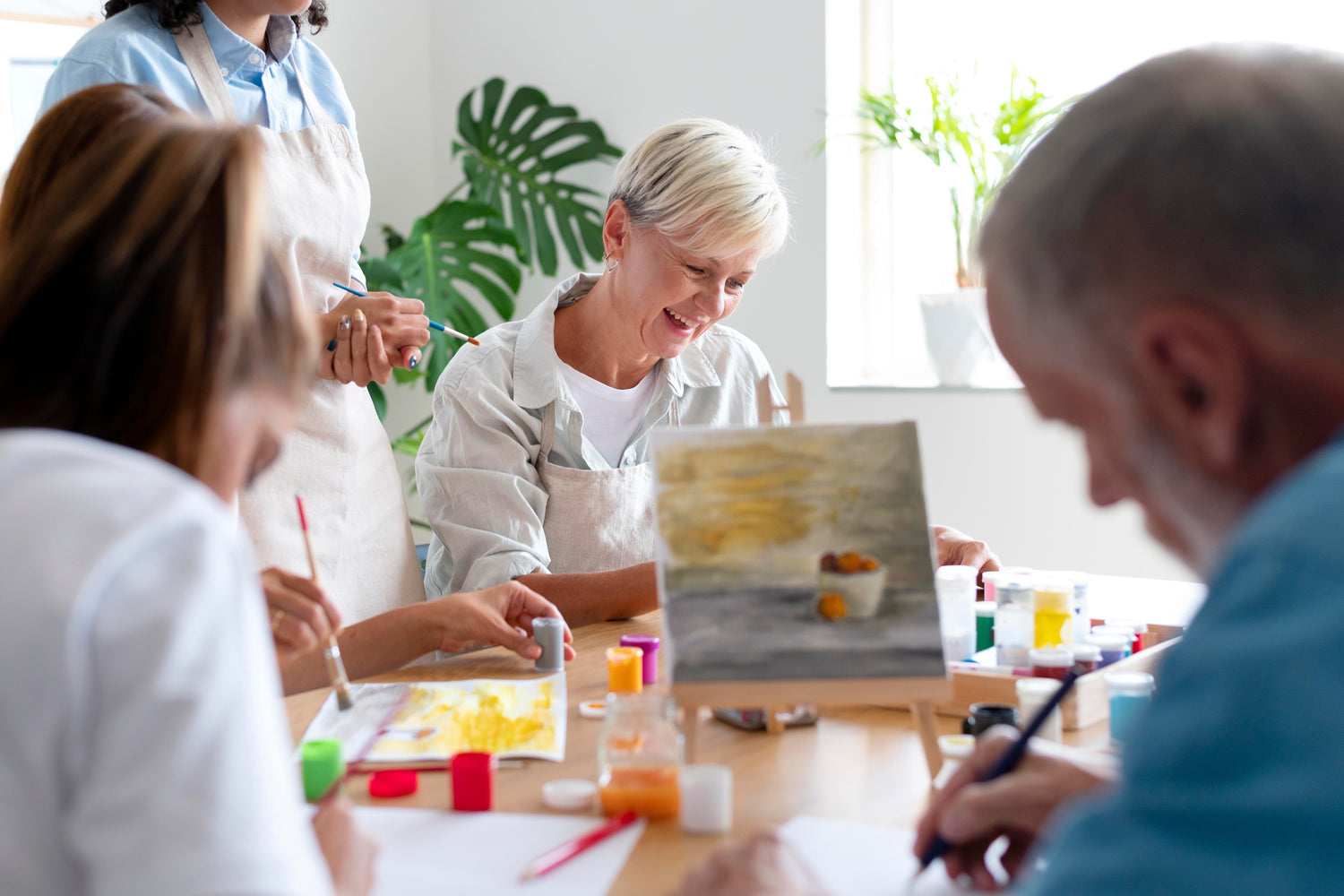
It's not about being good at art. It's about what happens when you make it.
There's a moment many people have. Standing in front of a blank canvas, halfway through a journalling page, or colouring in with their kids, when something quietly shifts. A tightness eases. Words that wouldn't come, somehow do.
That moment? It has a name. And there's an entire field built around it.
Art therapy is one of the most quietly powerful tools in holistic health, and it's one that more people are discovering, both as clients seeking healing and as practitioners building meaningful careers.
Whether you've been drawn to creativity all your life, or you're simply curious about a path that blends the emotional and the artistic, this post is for you.
So, What Exactly Is Art Therapy?
Art therapy is a form of expressive therapy that uses the creative process (drawing, painting, collage, sculpture, and more) to support emotional wellbeing, self-understanding, and healing.
It's not about being a "good artist." Art therapy is about using the act of making as a bridge between what we feel and what we can express. For many people, especially those who find it hard to talk about difficult experiences, putting something on paper or canvas can open doors that words simply can't.
A trained art therapy practitioner creates a safe, supportive space where clients can explore their emotions, process trauma, build self-awareness, and move toward healing, all through creative expression.
It draws on principles from psychology, counselling, and the arts. And when it's done well, it can be genuinely transformative.
Who Benefits from Art Therapy?
Art therapy is incredibly versatile. It's used across a wide range of settings and with many different populations, including:
- Children processing big emotions or navigating trauma
- Adults working through anxiety, depression, or grief
- People recovering from illness or managing chronic conditions
- Individuals exploring identity, purpose, or personal growth
- Elderly clients experiencing isolation or cognitive decline
- Groups in community, school, or workplace settings
One of the things that makes art therapy so special is that it meets people where they are. You don't need to be verbal to benefit. You don't need to have experience with art. You just need a space that feels safe, and a practitioner who can hold that space.

"It Has Truly Opened My Eyes to the Depth of What Art Can Do"
We recently shared the story of Amne Mustapha, a teacher and our April Student of the Month, who enrolled in Health & Harmony's Art Therapy Practitioner Course already knowing she loved art, but not quite knowing what it could become.
Amne came to the course with years of teaching behind her and a deep personal connection to creativity. What she didn't expect was how much the course would turn inward. Each module became an opportunity to slow down, sit with her own emotions, and express things that had previously been difficult to put into words. By the time she completed her portfolios, she wasn't just a teacher who knew about art therapy. She was someone who had experienced its power firsthand.
What she discovered surprised her.
"What surprised me most was how powerful and intentional art can be as a tool for healing. It has truly opened my eyes to the depth of what art can do beyond the classroom."
And she hasn't kept that learning to herself. Amne has already begun weaving art therapy approaches into her teaching practice, with a tangible impact on the students she works with every day.
If you've ever wondered what studying art therapy actually feels like from the inside, Amne's story can help guide you.

What Does a Holistic Health Career in Art Therapy Look Like?
This is the question most people have once the spark is lit. Okay, but what does this look like day to day?
The honest answer: it depends on the path you choose. And there are more options than most people realise.
As a practitioner working with clients, you might offer one-on-one or group sessions from a home studio, a rented therapy space, or in partnership with a wellness centre, school, or community organisation. Many practitioners start part-time alongside existing work and gradually build a client base.
As a teacher or educator, like Amne, you might weave art therapy principles into how you already work, whether that's in a classroom, a yoga studio, a workplace wellness program, or a community group.
As a workshop facilitator, you might run creative wellbeing workshops: retreats, corporate sessions, community events, that use art as a tool for connection and self-expression. This can be a deeply joyful and sustainable way to share this work.
In complement to another modality, many practitioners combine art therapy with counselling, life coaching, mindfulness, or other holistic health offerings to create a well-rounded practice.
Our Art Therapy Practitioner Course is one of the most comprehensive art therapy courses available online in Australia, designed to give you both the theoretical grounding and the practical skills to take this work into the world in a way that suits your life.
The beauty of building a holistic health career is that there's no single right shape. You design it around your skills, your life, and the people you want to serve.
Is Art Therapy Right for You?
You might be drawn to art therapy if:
- You have a background in teaching, counselling, social work, nursing, or allied health and want to expand what you can offer
- You've personally experienced the healing power of creativity and want to share it with others
- You're a creative person looking for a more purposeful direction for your skills
- You're seeking a career that genuinely helps people and aligns with your values
- You want flexibility to work for yourself, set your own hours, and build something meaningful
You don't need to have it all figured out. Amne didn't. She came to the course as a teacher and left with an entirely new lens on healing, with a growing therapeutic practice taking shape alongside her teaching career.
"I have already begun integrating many of the approaches and ideas into my teaching and I can see the impact it has not only on myself but also on the way I guide and support my students."
That's the power of this work. It doesn't stay in a box. It expands into everything.

Frequently Asked Questions
Do I need an art background to study art therapy? Not at all. Art therapy is not about artistic skill or technique. It's about using the creative process as a tool for expression and healing. Students come from all kinds of backgrounds, including teaching, nursing, counselling, and community work, with no formal art training required.
Is art therapy a recognised profession in Australia? Art therapy is a growing and respected field within the complementary health sector in Australia. One of the best ways to establish your credibility as a practitioner is through membership with a professional association like the International Institute for Complementary Therapists (IICT). IICT membership gives you professional recognition, insurance eligibility, and marketing support to help you attract clients. Health & Harmony students and graduates are also eligible for an exclusive IICT membership discount. Check out our webinar with IICT to learn more.
Can I study art therapy online? Yes. Our Art Therapy Practitioner Course is fully online and self-paced, meaning you can study from anywhere in Australia (or beyond) and fit your learning around your existing work and life commitments. If you'd like to explore the course before committing, our All In Pass gives you free 14-day access to our entire course library, including Art Therapy, with no lock-in and no pressure.
There's something quietly radical about choosing a career that centres creativity, connection, and healing. If that speaks to something in you, it's worth listening to.
We'd love to be part of where that takes you.
Want to share your own Health & Harmony journey? We'd love to hear from you. Email info@healthandharmony.au
0 comments