
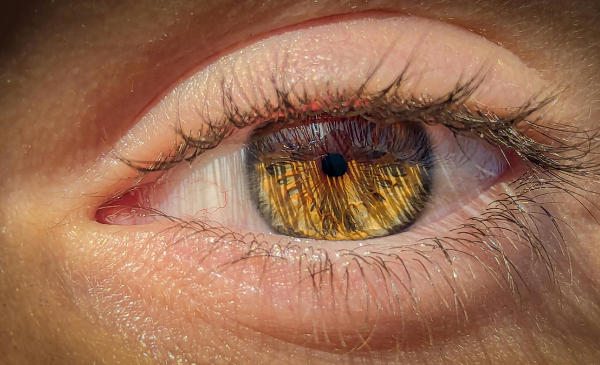
Look closely into a mirror and you'll notice something most of us rarely stop to consider: no two irises are quite the same. Beyond colour, the iris carries a landscape of fibres, flecks, rings and patterns, each one unique to you. To an iridologist, this landscape isn't just aesthetic. It's considered a map, one that may offer insight into your underlying constitution and how your body tends to respond to the world around it.
The Three Constitutional Types
In traditional Iridology, the iris is generally grouped into three broad constitutional types, largely determined by colour.
Blue and grey irises are traditionally associated with what's called the lymphatic constitution. Practitioners describe this type as often linked to the respiratory and lymphatic systems, with a tendency towards conditions like allergies, sinus congestion, or catarrh. Those with this constitution are sometimes considered more sensitive to environmental changes and prone to inflammation when out of balance.
Brown and dark irises fall under the hematogenic constitution. This type is traditionally connected to the digestive and circulatory systems, with practitioners often linking it to blood quality, liver function, and metabolic processes. Those with a hematogenic constitution are sometimes thought to run warmer and to process things, foods, emotions, experiences, more intensely.
Mixed or hazel irises represent what's known as the biliary constitution, a blend of the two above. This type is traditionally associated with the liver and gallbladder, and practitioners often describe it as combining traits of both the lymphatic and hematogenic types, depending on which colour is more dominant.
Green irises are generally read as a variation within the biliary constitution too, though many practitioners treat them as worth calling out on their own. A green iris is traditionally thought to begin as a blue base with a layer of pigment developing over the top, so it's often linked to a lymphatic foundation combined with liver and digestive involvement. Practitioners sometimes associate this type with a tendency to hold onto tension or unresolved stress, particularly around the digestive system.

It's Not Just the Base Colour, It's the Shade
Two people can both have brown eyes and still be read quite differently by an iridologist. Practitioners don't stop at the broad category, they also look at the depth and clarity of the colour itself. A clear, bright shade within any constitutional type is traditionally seen as a sign of vitality and a system that's currently running well, while a duller, murkier, or more clouded version of the same colour is often read as a sign of accumulated stress on that system, whether from diet, lifestyle, or unprocessed emotion.
This is part of why iridology is considered a living map rather than a fixed label. Your base constitution, blue, brown or mixed, is thought to stay with you for life, but the clarity and shade layered over it is believed to shift over time, offering a rough sense of how your body is coping in the present moment rather than a permanent verdict.
More Than Just Colour
Colour is only the starting point. Iridologists also look at the density and texture of the fibres radiating from the pupil, tight and closely woven fibres are traditionally read as a sign of a strong constitution, while looser, more open fibres may suggest a system considered more sensitive or reactive.
Markings within the iris, such as lacunae (small dark openings), pigment spots, or rings, are also studied. Each is believed to correspond to a specific organ or system, based on the iris chart practitioners use to divide the eye into zones.

Where This Fits in a Holistic Picture
It's worth being clear about what iridology is, and what it isn't. It is not a diagnostic tool, and it does not replace medical testing or a conversation with your doctor. What it offers instead is a lens, a way of noticing patterns and tendencies that might invite deeper reflection on your overall wellbeing.
Many holistic practitioners use iridology alongside other modalities, as one piece of a bigger picture rather than a standalone answer.
In herbal therapy, a practitioner might use an iris reading as a starting point for which systems to focus on, for example, choosing herbs that support the lymphatic and respiratory systems for someone with a blue constitution, or leaning toward liver and digestive support for a brown or green constitution, before refining that picture through a full case history.
In natural therapies, iridology is often used as one of several intake tools alongside diet history, symptom patterns, and lifestyle factors, helping build a fuller constitutional picture of a client before recommending a broader plan of diet, herbs, or lifestyle changes.
In holistic counselling, some practitioners bring iridology in gently as a reflective tool rather than a clinical one, using markings or constitutional traits as a conversation starter that helps a client notice patterns in how they hold stress or process emotion, opening the door to deeper discussion rather than offering answers on their own.
Used this way, it becomes less about prediction and more about curiosity: an invitation to pay closer attention to your body and how it communicates with you.

Curious to Learn More?
If reading the iris is something that speaks to you, this ancient practice pairs beautifully with other holistic modalities and is well worth exploring further. Whether as a personal interest or the start of a new professional path, there's a lot more depth here than most people realise.
Ready to go deeper?
Our Holistic Iridology Practitioner Course takes you from the basics covered here through to full constitutional analysis, iris chart reading, and how to bring iridology into professional practice.
And because iridology works so well alongside herbal therapy, naturopathy, and counselling, it's a natural fit for the All In Pass, giving you access to those courses and 40+ others so you can build out the fuller holistic picture at your own pace.
Check out our Instagram
We've got more to share tonight than fits in one email, so we're taking it over to Instagram. Come find us there for a closer look, and don't miss it!
This blog is intended for general educational purposes and is not a substitute for professional medical advice, diagnosis, or treatment. Always consult your GP or a qualified health professional about any concerns affecting your health.
0 comments